Project Details for Platformer
Plateformer Project - Epitech Berlin
Project Overview
This project challenged us to create a dynamic platformer game in 6 weeks as a team of 3 students, marking our debut with Unreal Engine 5. This experience served as the foundation for our learning of the engine, focusing on creating responsive character controls, level design, and implementing fundamental game mechanics.
Download the Windows Build | View on GitHub
Note: This project is a student achievement designed as a learning exercise.
Key Technologies
- Game Engine: Unreal Engine 5.6.1
- Programming: UE5 Blueprints
- Plugins: Async Loading Stream for asynchronous loading times
- Platform: Windows
- Assets: Use of 2 packs, RPG Hero Squad PBR Polyart for the character and KayKit - Platformer Pack for the maps, the rest is handmade.
Main Features
Fluidity-Focused Character Controller
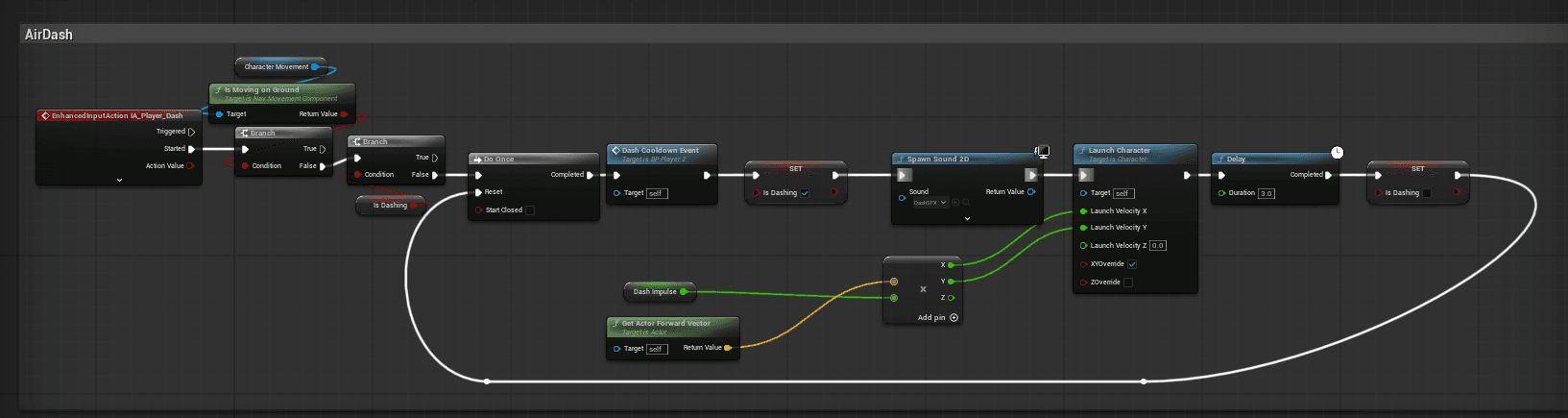
- Advanced movements: The player has several movement mechanics: double jump, air dash, and slide.
- Movement combinations: A jump initiated during a slide propels the player forward, creating a "boost" mechanic that rewards timing and mastery, the "Slide Jump".
- Designed for Speedrunning: The core of the gameplay lies in the ability to chain movements to complete levels as quickly as possible.
Evolving Level Design
- Three distinct levels: Each level was designed to introduce new challenges and gameplay concepts.
- Increasing complexity:
- Level 1: An introductory environment to master the basic controls.
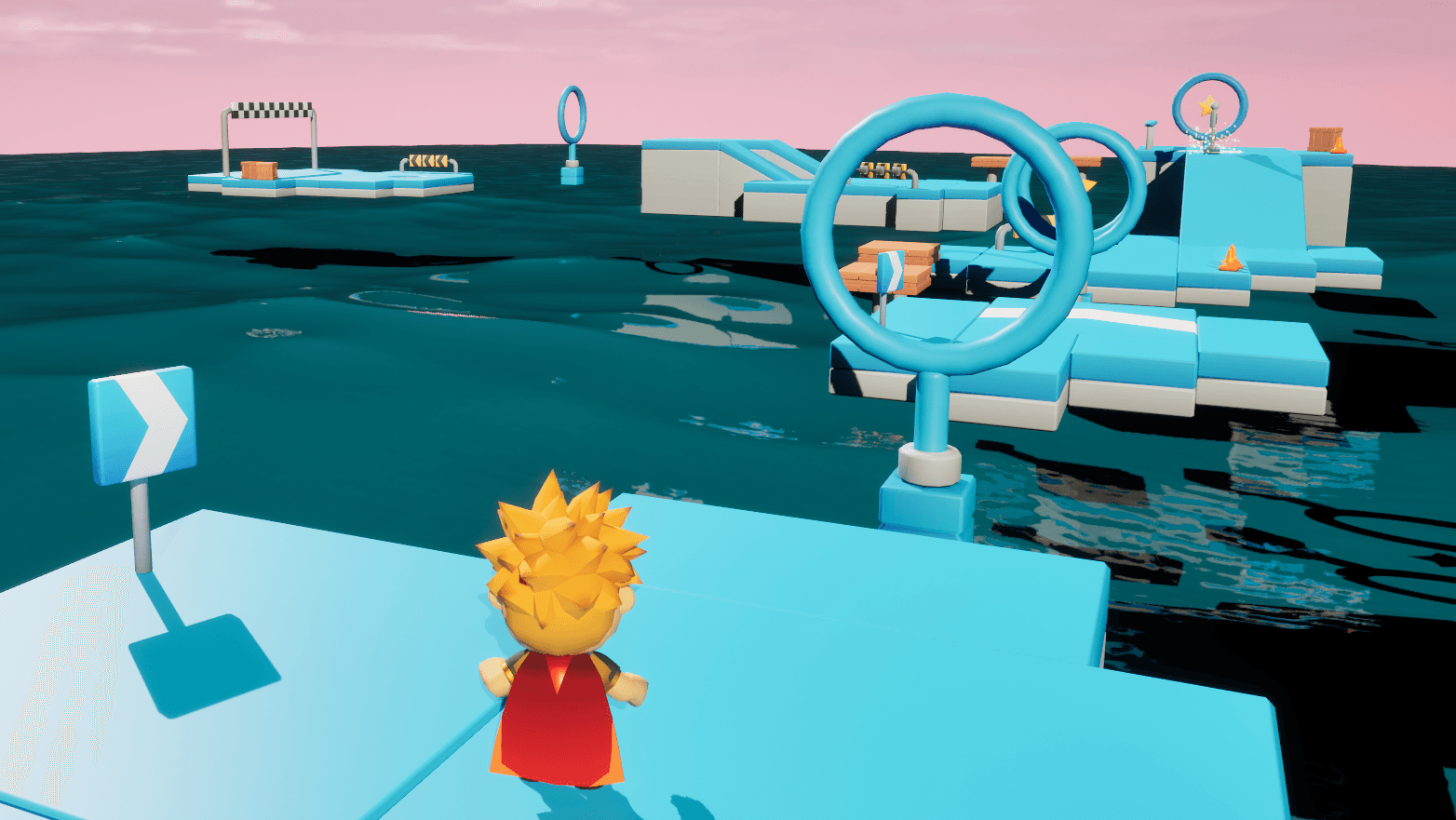
- Level 2: Adds rings to fly through, requiring precise aerial navigation.
- Level 3: Moving platforms test the player's anticipation and reactions.
Key Technical Points
Mastering the Fundamentals of Unreal Engine 5
The main technical challenge of this project was the complete learning of Unreal Engine 5 by a team with no prior experience. In 6 weeks, we became familiar with the editor, the architecture of the Blueprints system, character physics management, and level design tools.
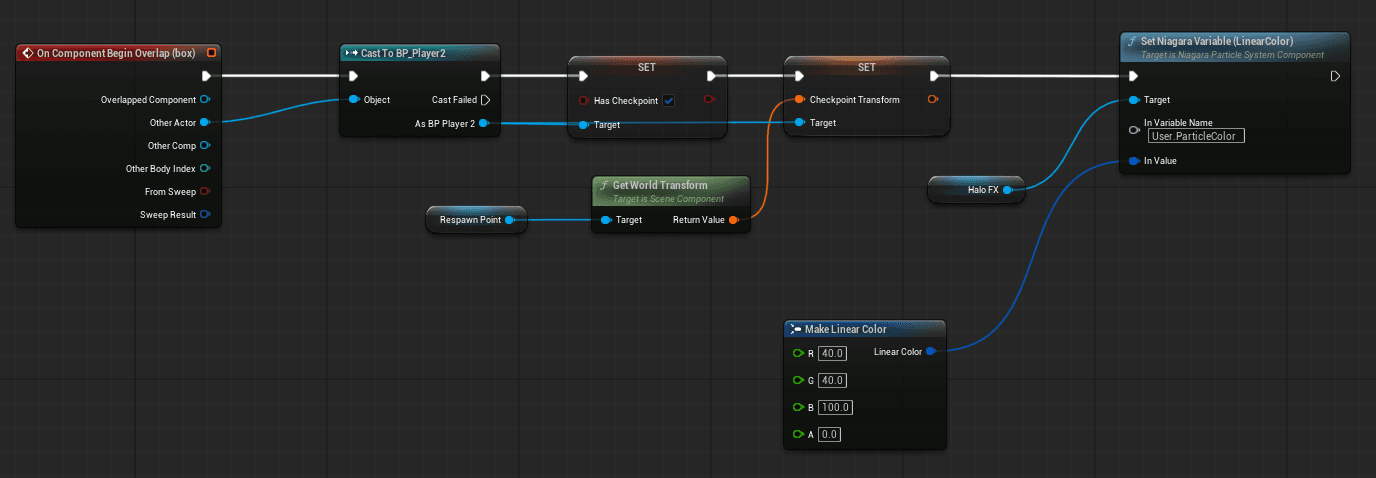
Gameplay Logic in Blueprints
All of the game's mechanics were implemented using the Blueprints visual scripting system, which allowed for rapid and iterative prototyping.
Here are some examples of the logic implemented:
Key Achievements
- Onboarding and delivery on an industry-standard game engine (UE5) from scratch.
- Implementation of a robust character controller with advanced and fluid movement mechanics.
- Design and creation of three functional levels with a tangible difficulty curve.
- Effective teamwork to deliver a playable and coherent prototype within the given timeframe.
Lessons Learned
- The crucial importance of pre-production: The planning phase allowed us to anticipate many technical challenges and better structure our work. Without it, we would have wasted precious time, especially as beginners with the engine.
- Scope Management: Learning to set achievable goals in 6 weeks was a key skill to ensure the project's completion.
- The Power of Blueprints: We saw the effectiveness of visual programming for quickly prototyping gameplay ideas and allowing all team members to contribute to the game's logic.
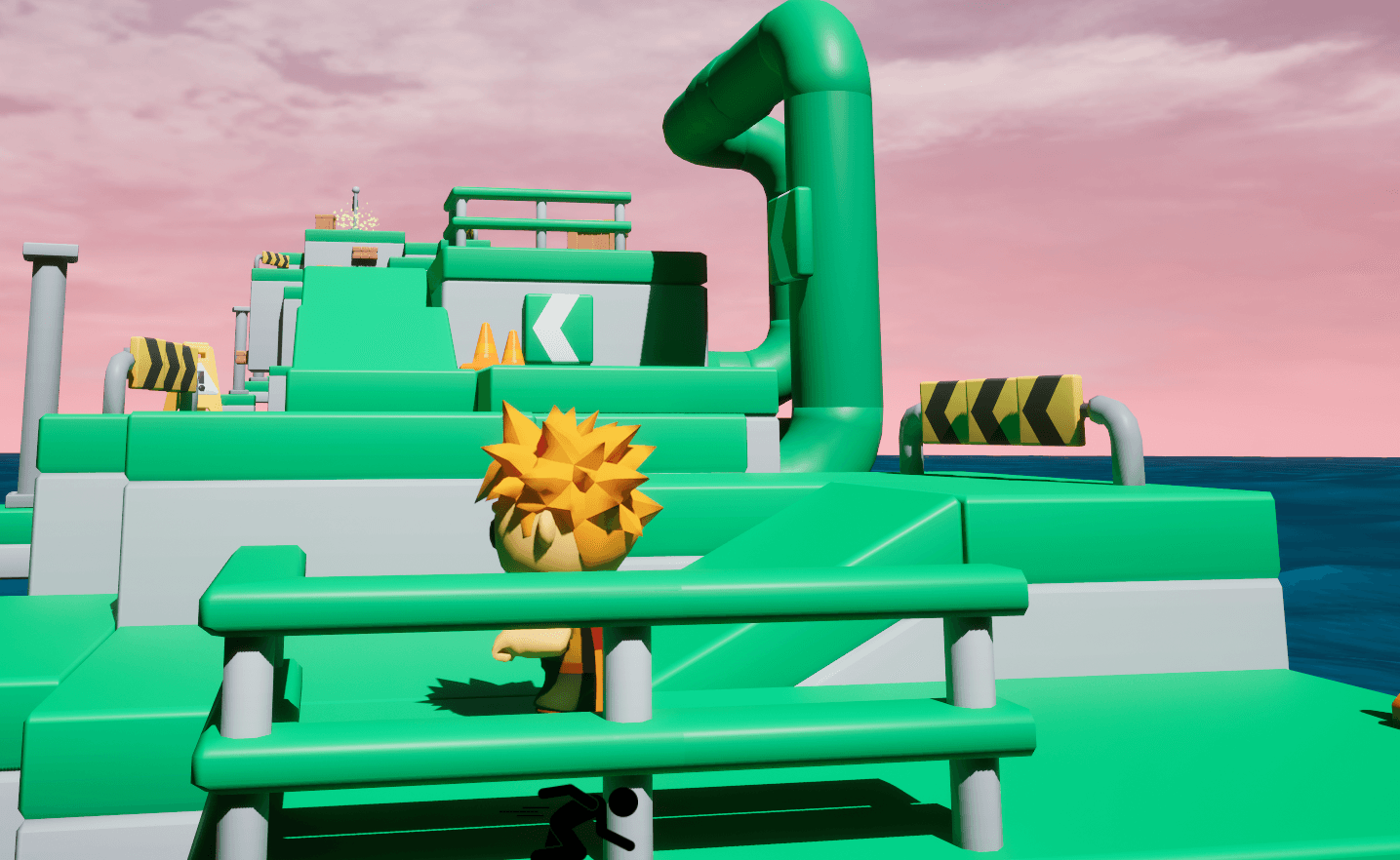
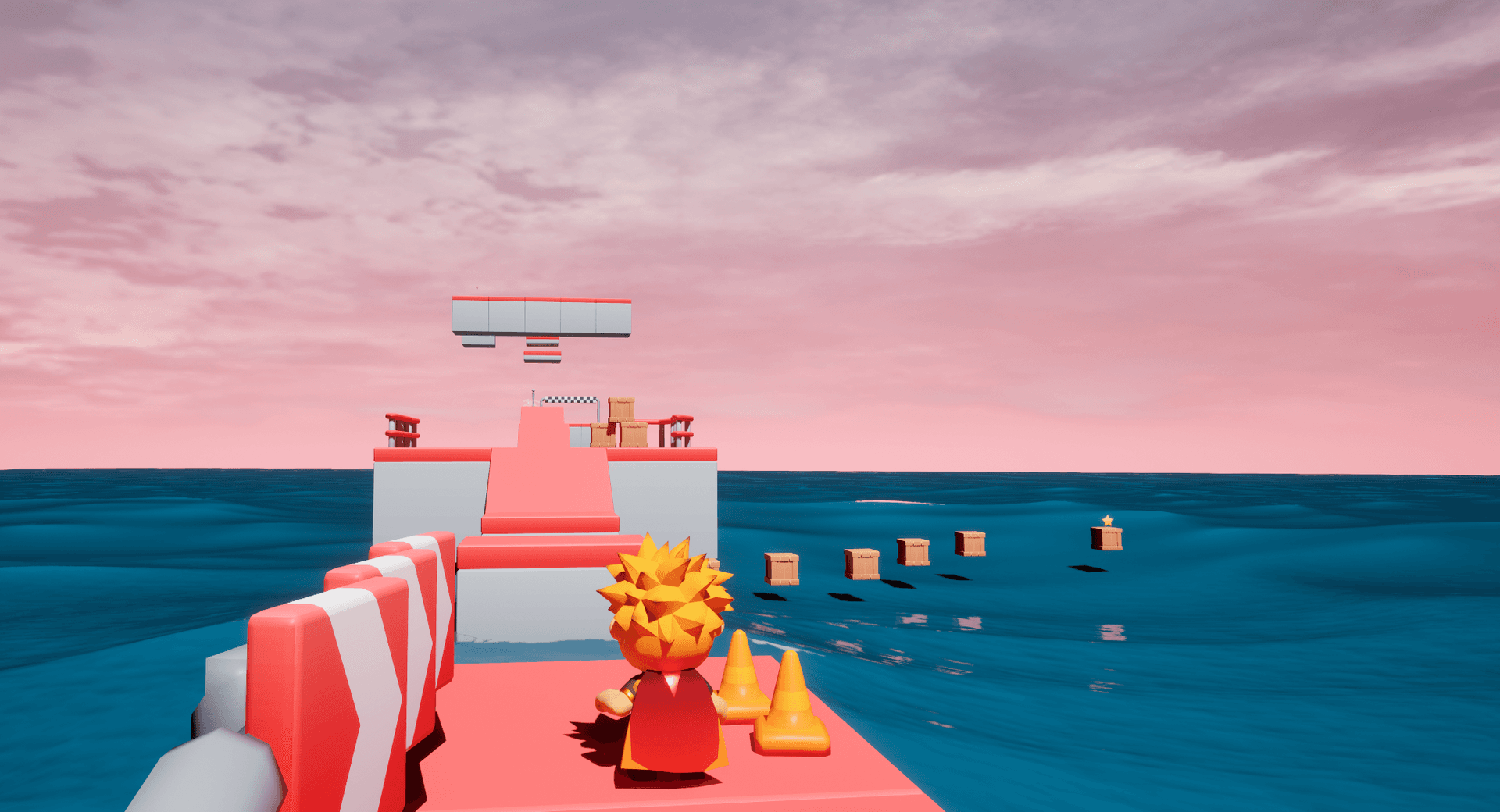
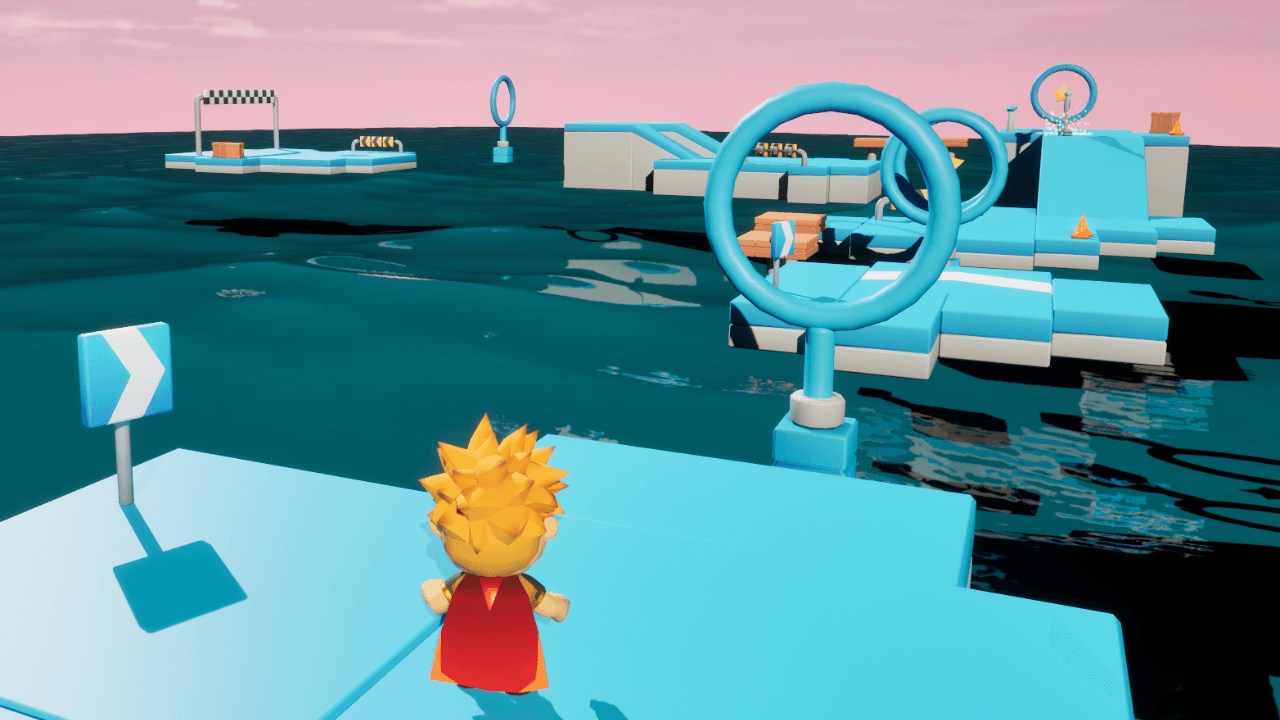
Some In-Game Screenshots