Project Details for DFARPG
DFARPG - Epitech Berlin
Project Overview
This project challenged us to go beyond basic mechanics and craft a polished, high-intensity Souls-like combat prototype in 6 weeks as a team of 3 students. Built on our prior experience with Unreal Engine 5, the focus this time shifted toward "Player Experience Juice" — ensuring every hit, dodge, and death feels deliberate and impactful. The result is a punishing but rewarding loop centered around a handcrafted cave, lethal enemies, and a climactic boss encounter.
Note: This project is a student achievement developed part-time as a school project. No public repository is available.
Key Technologies
- Game Engine: Unreal Engine 5.7
- Programming: UE5 Blueprints
- Plugins:
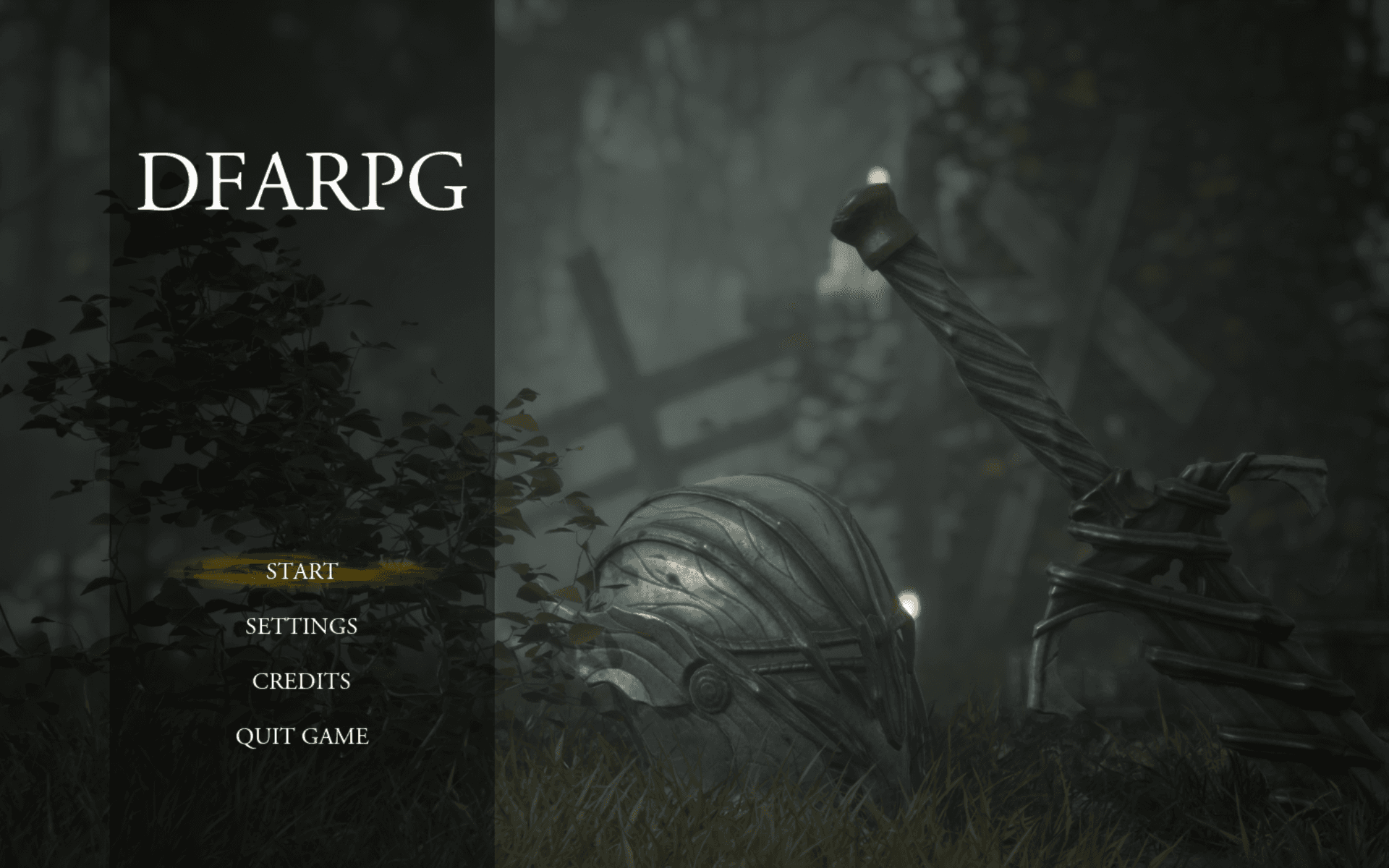
UINavigation 3.0for menu and UI flowUEGitPluginwith Git LFS for version control
- Version Control: GitHub
- Platform: Windows
Main Features
Souls-Like Combat Loop
- Stamina management: Every action — attacking, dodging, and blocking — consumes stamina, forcing the player to think carefully under pressure.
- Hit-stop & feedback: Carefully tuned hit-stop, screen shake, and sound design ensure every strike feels weighty and satisfying.
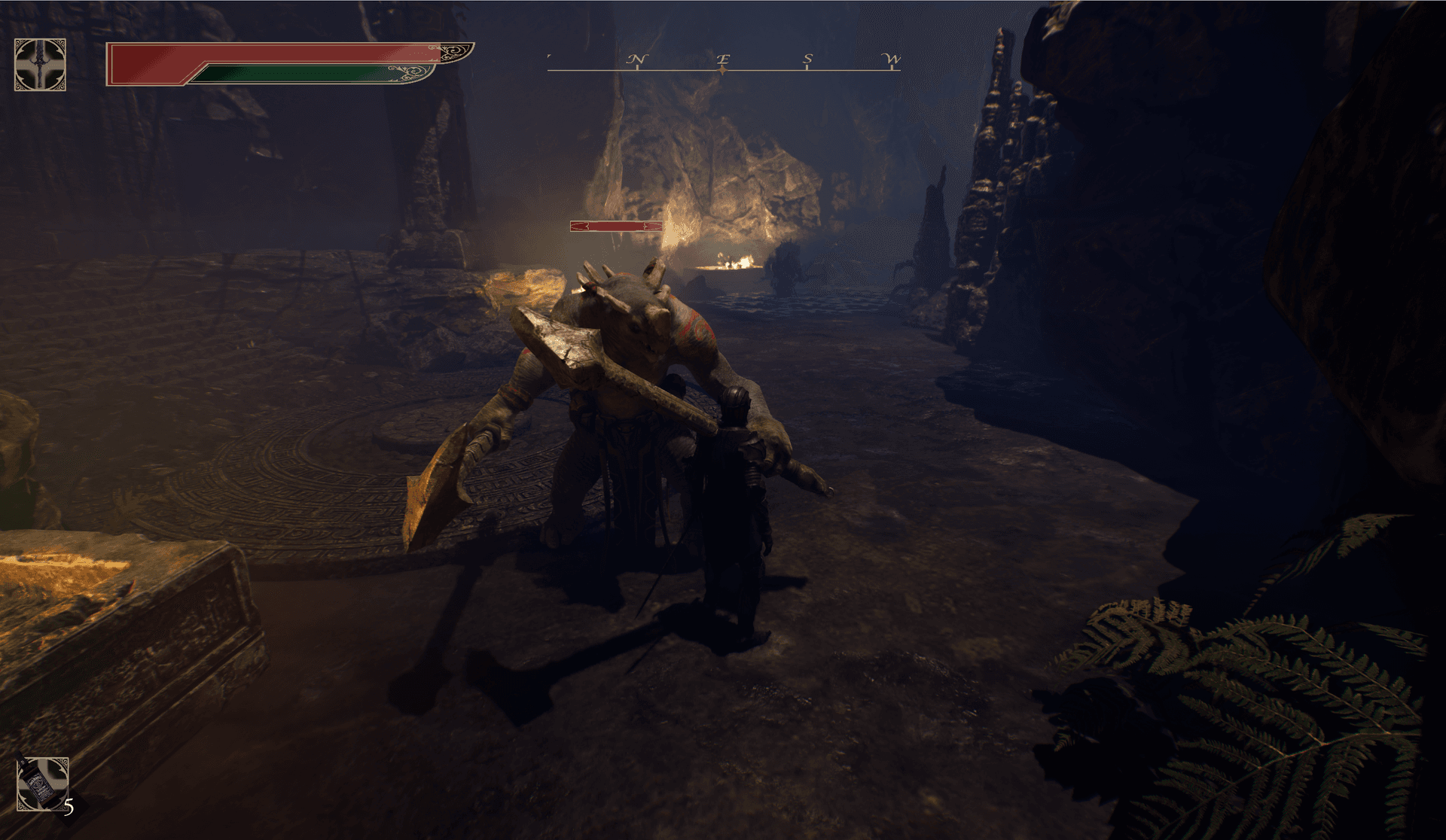
- Punishing difficulty: Enemies are lethal by design, encouraging the player to learn patterns rather than brute-force encounters.
Handcrafted World Structure
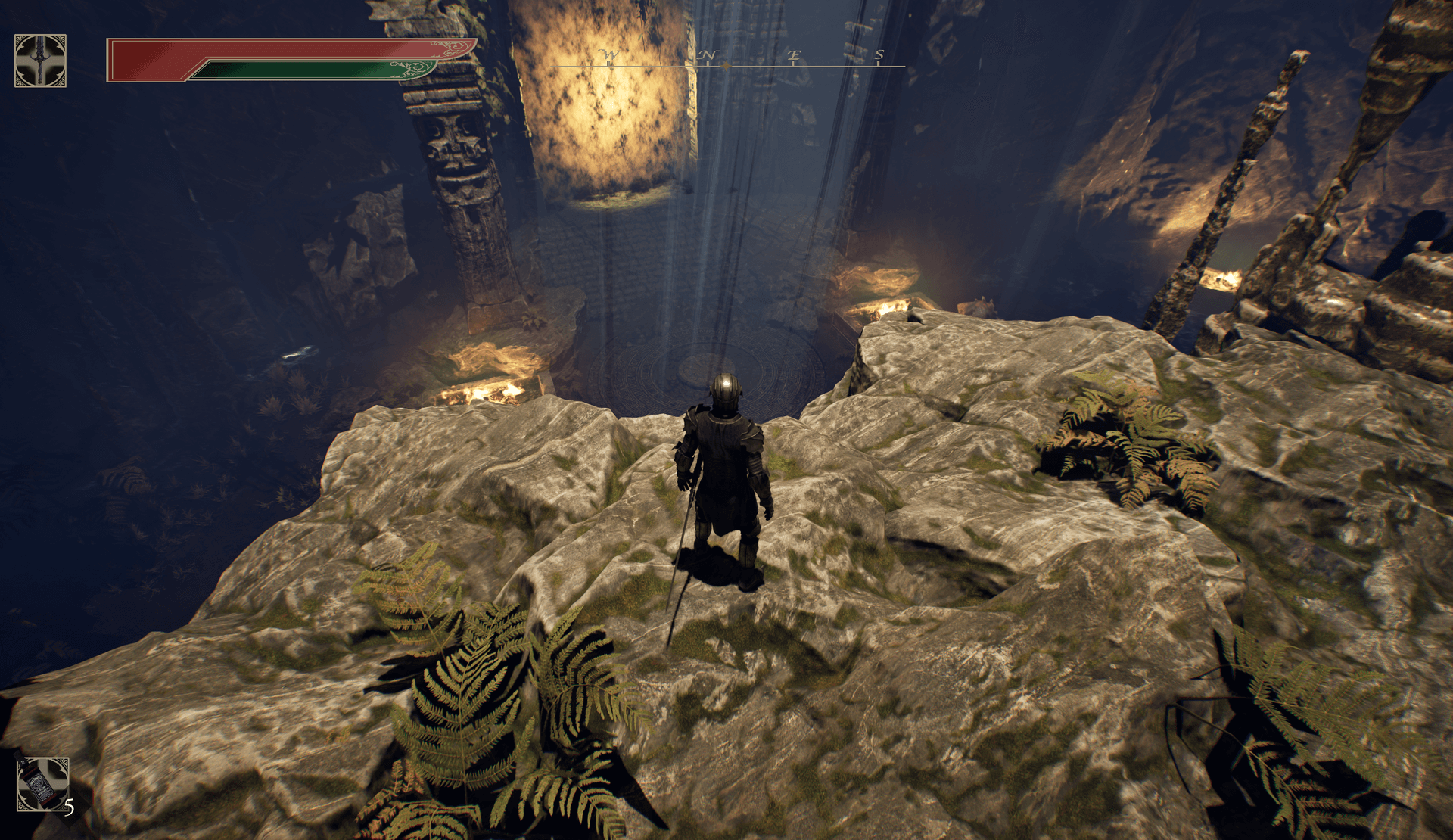
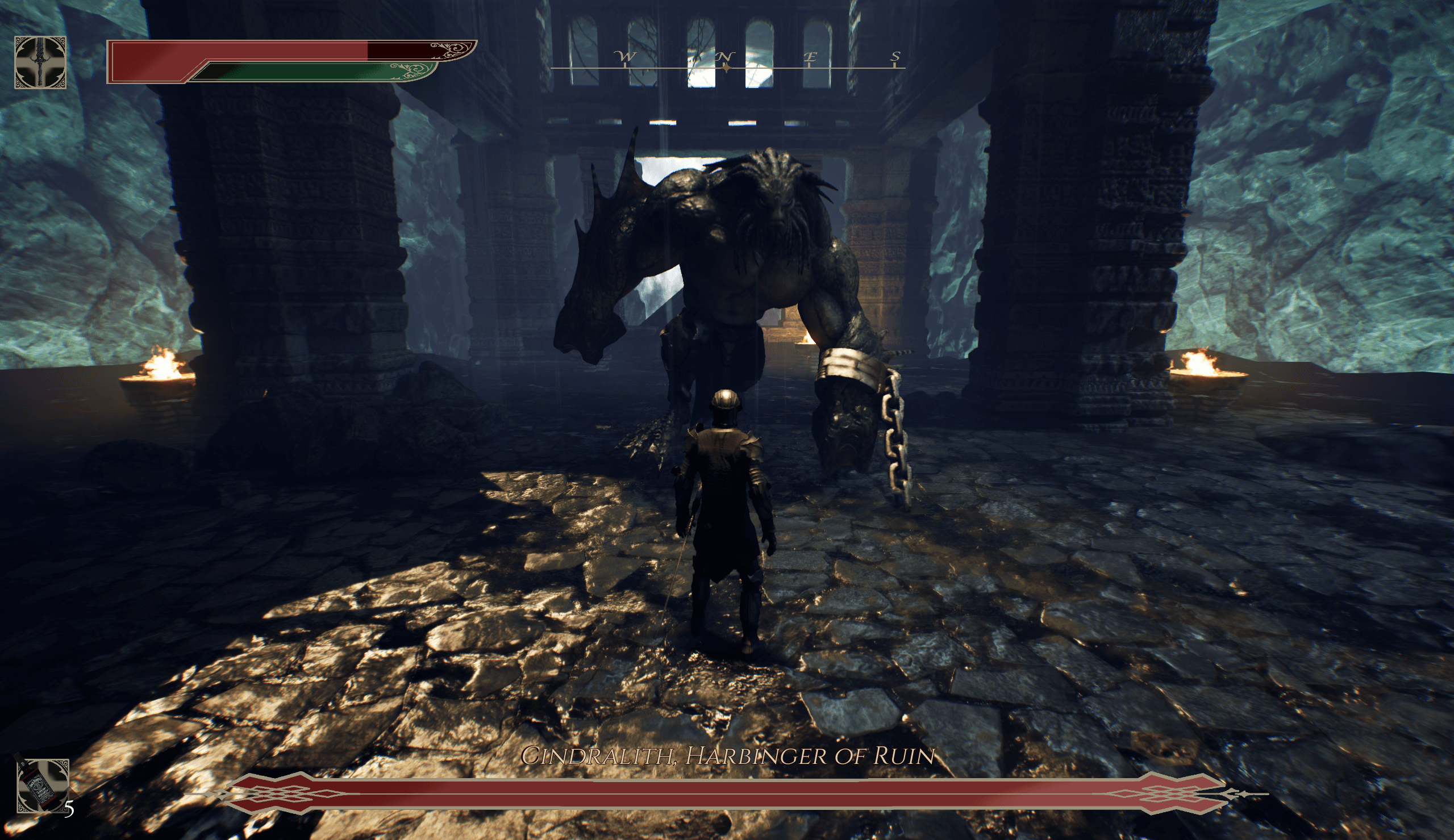
- The Cave: A moody, handcrafted cave environment guarded by lethal enemies, designed to build tension before the final encounter.
- The Gateway: A world-to-sanctum transition triggered by interacting with the Golden Door, powered by a custom loading manager for seamless state persistence.
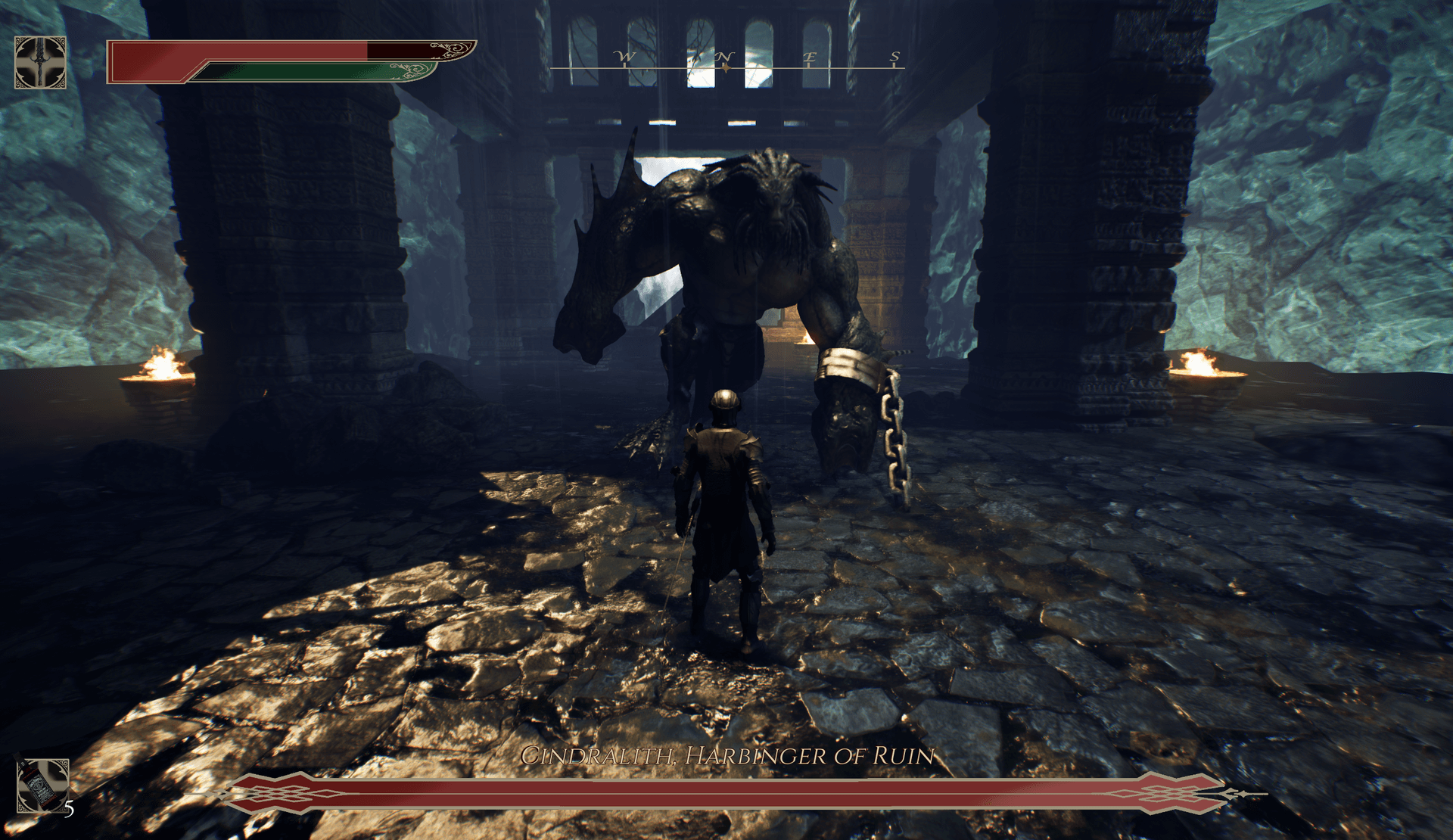
- The Boss: A high-stakes duel requiring precise timing and resource management, serving as the culmination of everything the player has learned.
Juice-First Design Philosophy
Every system was evaluated through the lens of player feel:
- UI feedback: Custom HUD elements including Health/Stamina bars and a Compass, all designed in-house.
- Sound design: Integrated directly into the gameplay systems to reinforce impact and atmosphere.
- Environmental atmosphere: Iterative lighting and composition work in the cave to create a sense of dread and scale.
Key Technical Points
The Loading Manager
The custom loading system was the standout technical achievement of this project. Rather than relying on standard level loading, the manager was built to handle state persistence and UI transitions smoothly, making the jump from the cave to the boss room feel professional and stable. Its reliability made it a reference point for other projects within our cohort.
Hand-Crafted Player Blueprint
The player controller was built entirely from scratch, without the use of generative AI or external templates. This deliberate choice gave us deep control over the feel of the combat, preserving the heavy and methodical movement that defines the Souls genre. The result is a character controller that is both expressive and precisely tuned.
Enemy AI
Enemy behavior was designed to be readable yet threatening. Each enemy follows a pattern the player can learn, but punishes mistakes swiftly — reinforcing the core design philosophy of the project.
Team & Responsibilities
This project was built by a team of three, with clear ownership over each pillar of the experience:
- Anaelle Urbon — Lead Level Designer & UI Artist: crafted the cave environment and designed all HUD elements.
- Miguel (Me) — Systems & AI Programmer: developed Enemy AI, Loading Management, Game Menus, World Interactions, and Sound Design.
- Eric — Player Mechanic Specialist: architected the Player Blueprint and core combat features (Movement, Attacking, Dodging).
Key Achievements
- Delivery of a polished, juice-focused prototype that goes beyond functional mechanics to prioritize player feel.
- Implementation of a custom loading manager that became a benchmark for other projects in our cohort.
- A hand-crafted player controller built from scratch, giving full control over the combat feel.
- A cohesive Souls-like atmosphere achieved through iterative level design, lighting, and sound work.
Lessons Learned
- Polish is a discipline, not a phase: Dedicating intentional time to juice and feedback systems from the start — rather than at the end — made a measurable difference in how the prototype felt to play.
- Clear ownership scales a team: Splitting the project into three distinct pillars (systems, player, environment) allowed each member to go deep on their domain without creating bottlenecks.
- The feel of a genre is in the details: Recreating the Souls experience isn't just about stamina bars and punishing enemies — it lives in hit-stop frames, audio cues, and the weight of every animation.
Future Roadmap
- Tutorial Level: A guided introduction to ease new players into the mechanics.
- Save System: A bonfire-style checkpoint system for persistent progression.
- Expanded Bestiary: More varied enemy patterns to diversify combat encounters.
Some In-Game Screenshots